RF Beauty Devices at Home: How to Compare RF Machines, Devices and Facial Tools
Shopping for an at-home RF beauty device can get confusing quickly. Some products focus on radiofrequency alone, while others combine RF with EMS, LED light, Shopping for an at-home RF beauty device can get confusing quickly. Some products focus on radiofrequency alone, while others combine RF with EMS, LED light, or facial massage. For beauty brands, choosing the right product takes more than comparing features and prices.
Direct answer: The best at-home RF beauty device depends on your target customer, product positioning, technical specifications, safety controls, and supporting evidence. Brands should compare RF output, electrode design, temperature management, treatment instructions, and manufacturing quality before choosing a product or OEM/ODM partner.
A good device is not necessarily the one with the most functions or the highest advertised power. It is the one that fits your market, has a clear purpose, and can be supported by reliable technical documentation. Let’s look at what matters when comparing RF machines, home-use devices, and facial tools.
What Is an At-Home RF Beauty Device?
An at-home RF beauty device uses radiofrequency (RF) energy and is designed for consumer use according to its specified instructions. These products are commonly positioned within home skincare and facial beauty routines.
How does RF technology work?
RF stands for radiofrequency. In beauty devices, RF energy can generate heat in tissue, depending on the device’s design and operating conditions. Researchers have studied certain RF applications for skin appearance and rejuvenation, but results depend on the specific device and treatment protocol.
That distinction matters because the term “RF” describes a technology, not a guaranteed result.
Two products may both advertise RF technology while using different frequencies, electrode designs, output levels, control systems, and treatment instructions. Their performance and risk profiles may therefore differ.
For a brand developing a private-label product, the first question should be: what role should this device play in the customer’s skincare routine? The answer helps determine which product design, specifications, and supporting evidence are relevant.
What types of at-home RF beauty devices are available?
Home-use RF products generally fall into a few broad groups.
| Product type | Typical product direction | What buyers should examine |
| Single-function RF facial devices | A focused RF skincare product | RF specifications, electrode design, temperature management, and operating instructions |
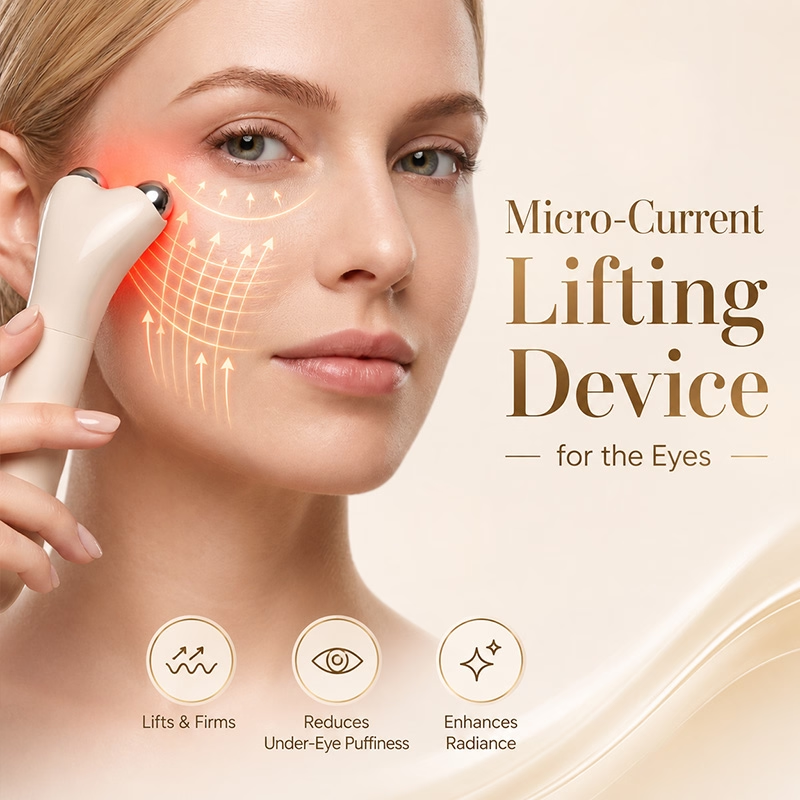
| RF eye-care devices | A compact device designed for the eye-care area | Intended-use boundaries, contact design, output controls, and specific safety instructions |
| Multi-function facial devices | RF combined with functions such as EMS, LED, or massage | The purpose and evidence for each function, interaction between modes, and user instructions |
| RF facial tools with ergonomic or massage-focused designs | A home-use skincare experience built around a particular form factor | Ease of handling, treatment contact, cleaning, and consistency of use |
These categories are not interchangeable. An RF eye-care device, for example, should not automatically be treated as suitable for every area of the face.
Brands should confirm the intended use and operating restrictions of the actual model before deciding how to position it.
Why are home-use RF devices different from professional RF machines?
The phrase “RF machine” can refer to very different products. Some are consumer beauty devices, while others are larger professional or medical aesthetic systems.
Home-use devices are designed around their specified consumer use. Professional systems may have different operating parameters, treatment protocols, and supervision requirements.
A shared technology name does not establish equivalent performance. Brands should avoid comparing home-use products with professional treatments unless the comparison is accurate and adequately supported.
Nicemay focuses on home-use personal care and beauty devices, including handheld facial beauty products and multi-function devices. Its manufacturing focus is different from manufacturing large medical aesthetic equipment. For B2B buyers seeking consumer-facing products, that distinction aids define the appropriate supplier category.
Explore Nicemay’s home-use beauty device range to review available product platforms and discuss product selection.

What Is the Difference Between RF Machines, RF Devices, and Facial Tools?
These terms frequently overlap in online searches, but they do not always describe the same product. Understanding the differences makes it easier to compare suppliers and build a coherent product range.
How should buyers interpret these product terms?
“RF machine” is a broad search phrase that may refer to a professional system or a consumer product. “RF beauty device” more directly describes a product using RF technology, while “facial tool” can include many different types of beauty products.
A facial tool might use RF, microcurrent, EMS, LED light, vibration, cooling, or no powered technology at all. The product name alone does not tell you what the device does.
For procurement, focus on the actual product specification rather than the category label.
Which product format fits your brand?
| Buying consideration | Handheld RF device | Multi-function facial device | Larger professional system |
| Main context | Personal home-use routine | Personal home-use routine with several functions | Professional treatment setting, depending on product classification |
| Product story | One primary technology | A combination of technologies | Professional equipment and treatment capabilities |
| User guidance | Consumer instructions for the specific model | Instructions for each mode and permitted combination | Training and operating requirements depend on the system |
| Product-development focus | RF design, controls, usability, and safety | RF plus integration of other functions | System-specific engineering, intended use, and applicable requirements |
| Typical buyer consideration | A focused consumer product | A broader home-use beauty product | A professional or institutional equipment requirement |
The appropriate option depends on the target customer, channel, price positioning, and planned use.
For a brand selling through e-commerce or retail, a clear product purpose can be more valuable than a long feature list. Customers need to understand what the product is designed for and how to use it correctly.
How Does RF Compare With Microcurrent, EMS, and LED Light?
RF, microcurrent, EMS, and LED light are different technologies. Don’t treat them as interchangeable just because they appear in the same beauty device.
What are the main differences?
RF uses radiofrequency energy. Microcurrent and EMS use electrical stimulation under different operating approaches, while LED devices deliver light at selected wavelengths.
Their technical requirements, intended uses, and supporting evidence differ.
| Technology | Basic mechanism | What brands should compare |
| RF | Radiofrequency energy that can generate heat in tissue | Frequency, output, electrode design, temperature management, and treatment controls |
| Microcurrent | Low-level electrical current | Output specifications, contact design, operating modes, and evidence for intended claims |
| EMS | Electrical stimulation designed for its specified use | Output parameters, electrode configuration, intensity controls, and instructions |
| LED light | Light delivered at selected wavelengths | Wavelength, irradiance, treatment coverage, exposure time, and optical safety |
These descriptions are general technical distinctions, not guarantees of a particular cosmetic result.
Should brands choose a single technology or combine several?
A single-function product can offer a focused product story. A multi-function device may suit a brand looking for a wider home-use skincare concept, but it also calls for careful integration and clearer instructions.
Take Nicemay’s MR-2590 as an example of a multi-function product platform. The company’s product-category page describes a device combining RF, EMS microcurrent, vibration, red light, and dual-head 3D rollers. It also lists a digital display, Type-C charging, an IPX6 rating, and a 1,200 mAh battery.
These are published product features, not independent evidence that the device achieves a particular clinical outcome. Buyers should still review the complete model specification, intended use, and supporting documentation before making product claims.
The lesson is simple: additional functions can help define a product’s position, but every function should have a clear purpose.
For a more detailed comparison, read our related article: RF vs Microcurrent vs EMS: Which Facial Technology Fits Your Brand?
That guide covers the differences between these technologies and how beauty brands can choose a suitable direction for their product range.
Do At-Home RF Beauty Devices Really Work?
Some home-use RF devices have exhibited promising results in studies of selected skin-related outcomes. However, results vary by device, protocol, and study quality. A technology label alone cannot prove that a particular product will deliver the same result.
What does the evidence say?
Clinical research has examined some noninvasive home-use RF devices for outcomes related to skin appearance. Studies differ in participant numbers, treatment periods, device specifications, and assessment methods.
That variation matters. Evidence from one model does not automatically validate a different device, even if both use RF technology.
Brands should ask whether the available evidence applies to the actual product and intended claim. A study of a particular device may inform product development, but brands should not use it to make broader promises the study did not establish.
What should brands look for in a study?
A useful evidence review should consider:
- Device identity: Was the same model studied, or was the tested product sufficiently comparable?
- Study design: Was there a control group, randomization, or blinded assessment where appropriate?
- Participants: How many people participated, and what were the study population’s characteristics?
- Treatment protocol: How often was the device used, and over what period?
- Measured outcomes: Were the results assessed using objective measurements, professional assessments, or user reports?
- Study limitations: Were the sample size, follow-up period, or methodology limited?
A small study may still be useful, but interpret its findings within its limitations.
What does this mean for product marketing?
Avoid statements such as “professional results at home” or “guaranteed lifting” unless the exact claim is supported and permitted for the product and target market.
A product’s RF function does not automatically prove wrinkle reduction, long-term lifting, or a specific result within a fixed number of days.
For a more detailed discussion of evidence, specifications, and safety, read Do At-Home RF Devices Work? A Specification and Safety Guide for Brands.
That supporting article goes deeper into the evidence review process and the questions buyers should ask before approving RF product claims.
Which RF Device Specifications Should Buyers Compare?
A clear specification sheet is one of the most useful tools in the product-selection process. It helps buyers compare devices based on measurable characteristics rather than marketing language.
Which technical parameters matter most?
| Specification | What to ask the manufacturer |
| RF frequency | What operating frequency does the device use, and how is it verified? |
| Output or power | What value is specified, and under what test conditions? |
| Electrode design | How many electrodes are used, and what are their shape and contact area? |
| Temperature control | Does the device measure or limit temperature? How does the control work? |
| Contact detection | Does the device check skin contact before enabling output, if relevant to the design? |
| Treatment modes | What changes when the user selects a different mode? |
| Treatment duration | What session length and use frequency are specified in the instructions? |
| Automatic shutoff | Does the device include a timer or other shutdown controls? |
| Power supply | What charging, battery, and operating requirements apply? |
| Quality control | How are functional performance and production consistency verified? |
Not every product needs the same features or parameters. The appropriate design is contingent on the intended use, product architecture, and applicable requirements.
Does higher RF power mean better performance?
Not necessarily. A power figure doesn’t tell you everything about how a device delivers energy or performs during use.
Electrode design, contact conditions, temperature management, operating time, and control logic all influence the overall system. Two products with similar headline specifications may still differ in design and performance.
Ask the manufacturer to explain how each parameter is measured and how it relates to the product’s intended use. If a figure matters to your marketing, make sure you can document and verify it.
Why does electrode design matter?
Electrodes are part of the system that delivers RF energy. Their number, shape, area, and arrangement can affect the product design and how the device contacts the skin.
However, more electrodes do not automatically mean better results. Buyers should review the complete design and ask what tests support the chosen configuration.
For a multi-function product, also check how the RF components interact with the other features and whether the instructions clearly explain the permitted operating modes.
How should buyers evaluate temperature management?
Because RF devices can generate heat, temperature-related controls deserve careful attention.
Ask the manufacturer whether the product includes direct temperature measurement, temperature limiting, timed operation, contact sensing, or other controls. These features are not identical, so the supplier should explain exactly what the final model includes.
Also ask for relevant test documentation. Do not assume that a device has a particular safety function simply because the concept drawing or marketing material mentions it.
How Can Brands Evaluate RF Device Safety?
Safety depends on the complete product, its intended use, design, operating instructions, and the user. It should not be reduced to a single certificate or feature.
Which safety features should buyers check?
Depending on the product, relevant features may include temperature monitoring or limiting, automatic shutoff, contact detection, charging protection, and controls against unintended operation.
Buyers should also review the user manual, warnings, cleaning instructions, and any restrictions on use around sensitive areas.
A supplier should be able to explain which features are present in the final production version and provide relevant supporting documentation.
Is a home-use RF device the same as RF microneedling?
No. Noninvasive home-use RF devices and RF microneedling devices are different product types.
RF microneedling uses needles to deliver RF energy into the skin. The U.S. Food and Drug Administration has warned about serious complications associated with certain uses of RF microneedling and states that it should not be used at home.
That warning should not apply to every noninvasive home-use RF device. At the same time, brands must not blur the distinction between a consumer beauty tool and an invasive medical procedure.
Before launching a product, confirm its intended use, product classification, instructions, and applicable compliance requirements.
Which documents should buyers request?
Start with the product specification sheet, user instructions, relevant electrical and functional test reports, quality-control information, and, where applicable, documentation for the intended market.
A report or certificate for one product does not automatically establish compliance for another model or every destination market. Requirements depend on product design, claims, and classification.
If a supplier says that testing or certification is complete, ask which model it covers and whether the documentation fits the product you intend to purchase.
For a wider discussion of the differences between home-use devices and professional treatments, read Can At-Home Beauty Devices Replace Expert Facials?.
This supporting article explains why product positioning should reflect the actual device and why home-use products should not be marketed as replacements for every professional treatment.
How Should Brands Choose an RF Beauty Device Manufacturer?
Choosing a manufacturer is not just about finding the lowest quotation. The right partner should be able to discuss product specifications, sample development, quality controls, customization, and the documentation needed for your target market.
What should buyers ask a potential supplier?
Before starting a project, request:
- A specification sheet identifying the product model and RF parameters.
- Available functional, electrical, and safety test documentation.
- Details of temperature-related controls and operating instructions.
- Sample availability and the process for evaluating or revising a sample.
- Quality-control procedures for components and finished devices.
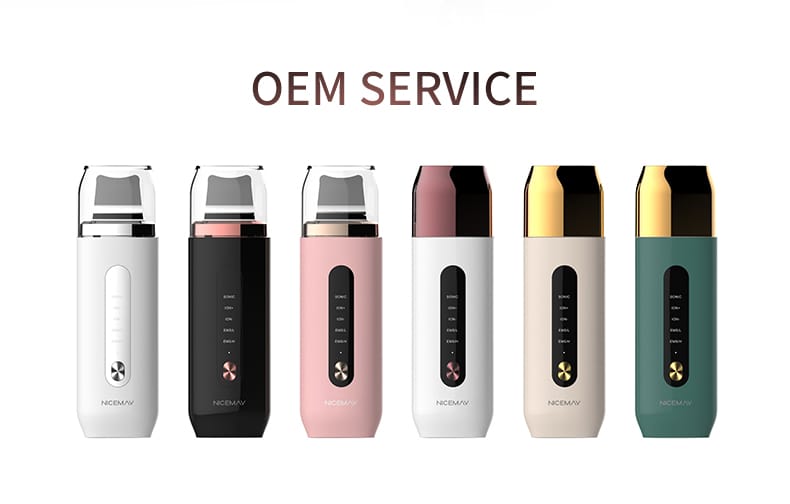
- Options for logo, product color, finish, packaging, and other customization.
- A clear explanation of available documentation and any remaining testing requirements.
- A proposed development and production schedule.
Not every document will necessarily be ready at the first inquiry. The important thing is to distinguish between existing evidence and work that still needs to be completed.
What manufacturing capabilities matter?
For an OEM/ODM project, buyers should look at more than the product concept. They should also understand how the manufacturer moves from design and sample approval to tooling, assembly, testing, and mass production.
According to Nicemay’s About Us page, the company was founded in 2008 and reports a 5,000 m² production facility, more than 150 skilled professionals, and 300+ patents. The company also describes its home-use beauty device focus and its OEM/ODM development capabilities.
These figures provide context about the supplier’s stated background and manufacturing resources. They do not, by themselves, prove the performance or safety of any particular RF model. Buyers should still evaluate the actual product and its supporting documentation.
Nicemay’s OEM/ODM solutions page describes its manufacturing and customization process, including tooling, production, and quality assurance. For brands planning a new RF or multi-function facial device, the next step is to discuss the requirements of the specific project rather than assume every customization is available for every model.

Should you choose OEM or ODM?
The right approach depends on how much of the product you want to customize.
| Consideration | ODM | OEM |
|---|---|---|
| Starting point | An existing product design or platform | Your own design or defined specifications |
| Customization | May include branding, colors, finishes, packaging, and supported product options | Can involve more extensive design and specification requirements |
| Development work | Often starts from an existing design | May require additional engineering, tooling, and validation |
| Best fit | Brands that want to evaluate an existing product platform | Brands with specific product requirements or a distinctive concept |
Actual minimum order quantities, lead times, costs, and available options depend on the model and scope of customization. Confirm these details with the manufacturer before making a commercial commitment.
How can brands reduce product-development risk?
A clear project brief helps everyone work from the same requirements.
Before requesting a quotation, define your target market, intended customer, preferred product format, key features, estimated order quantity, packaging requirements, and launch timing.
Then agree on the specification, sample approval criteria, required documentation, and quality checks before mass production. If a key component or feature changes later, review whether the change affects testing, instructions, or marketing claims.
This process helps reduce avoidable misunderstandings and makes it easier to compare quotations from different suppliers.
Frequently Asked Questions
Are at-home RF beauty devices worth considering for a brand?
They may be worth considering when RF fits the brand’s target customer, product positioning, and available evidence. Buyers should evaluate the actual model, technical specifications, safety controls, and market requirements before deciding.
What is the difference between an RF machine and an RF facial device?
The terms can overlap, but “RF machine” may refer to professional equipment or a consumer product. “RF facial device” more directly describes a facial beauty product using radiofrequency. Always check the intended use and actual specification.
Can RF be combined with EMS or LED light?
Some devices combine RF with EMS, LED light, or massage. Each function needs a clear purpose, appropriate technical support, and accurate instructions. The presence of several technologies does not automatically establish better performance.
What RF specifications should I request from a supplier?
Start with RF frequency, output or power specifications, electrode design, temperature-related controls, treatment modes, operating instructions, power requirements, and relevant test documentation. Ask how important values are measured.
Does a higher RF output guarantee better results?
No. Output must be considered alongside the complete design, controls, treatment protocol, intended use, and supporting evidence. A single number cannot establish the overall quality or effectiveness of a device.
Can a home-use RF device replace professional treatments?
Not in every case. Home-use devices and professional treatments can differ in technology, operating conditions, intended use, and supervision. Brands should avoid unsupported claims that a consumer device provides equivalent results.
What should I look for in an RF beauty device OEM/ODM partner?
Look for clear technical communication, an appropriate product range, sample-development support, documented quality controls, customization options, and transparency about testing and market requirements.
Conclusion: How Can Brands Choose the Right RF Beauty Device?
The right at-home RF beauty device is not necessarily the one with the most functions, the highest advertised output, or the lowest price. It is the product that fits your target market, has a clearly defined purpose, and can be supported by suitable technical documentation and evidence.
Start by comparing the device type, RF specifications, electrode design, temperature management, user instructions, and manufacturing capabilities. Then review the available documentation and confirm the requirements for your intended market.
For beauty brands, importers, distributors, and e-commerce sellers, a structured product-selection process can help turn a technical concept into a more clearly positioned consumer product.
At Nicemay, we focus on home-use beauty devices and OEM/ODM development. Visit our home-use beauty device range or OEM/ODM solutions page to learn more about the available product platforms and development process.
To discuss your project, contact ken@sznicemay.com.
References
- U.S. Food and Drug Administration. Potential Risks with Certain Uses of Radiofrequency (RF) Microneedling – FDA Safety Communication.
- Nicemay. About Us.
- Nicemay. Home-Use Beauty Devices Manufacturer.
- Nicemay. OEM/ODM Manufacturing Solutions.
- Nicemay. Product Category.