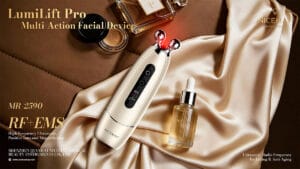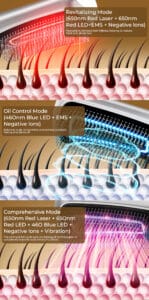
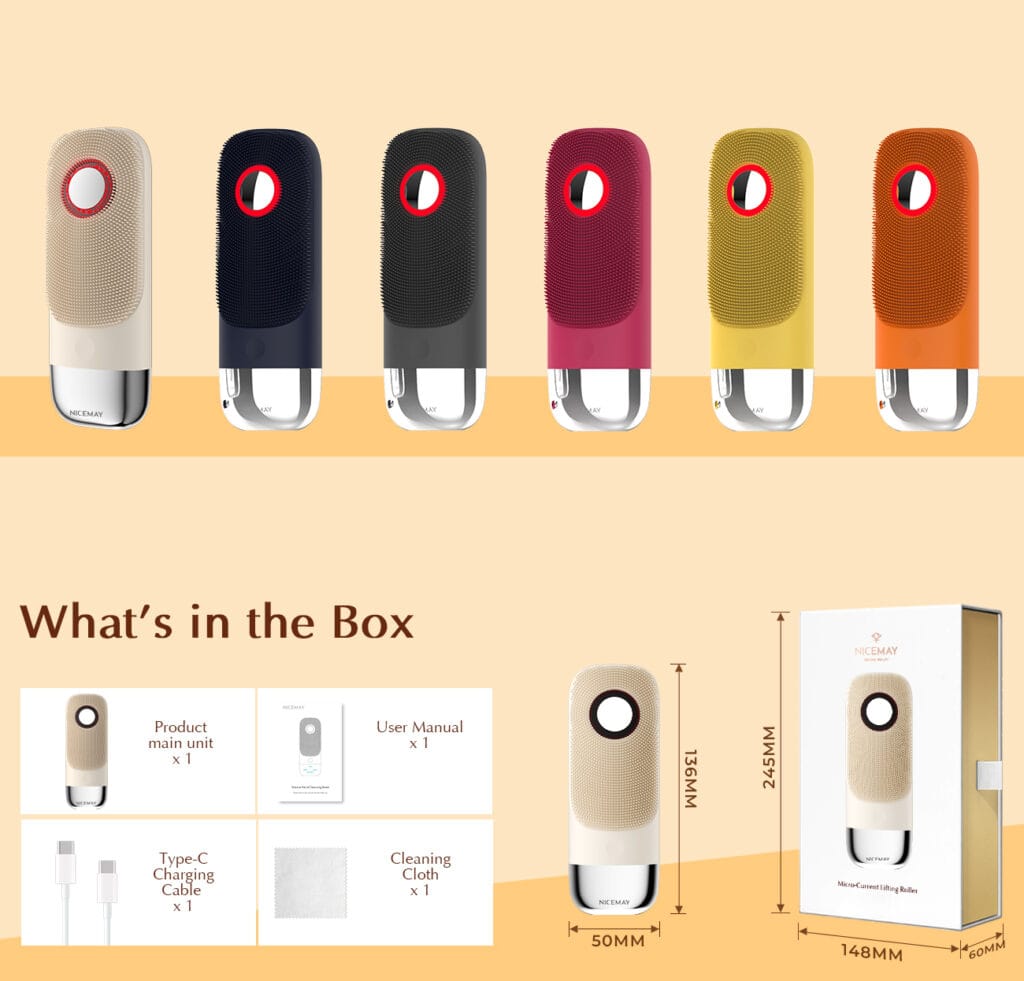
Consumers want visible change, but buyers face inconsistent claims, incomplete specifications, and expensive safety or compliance mistakes.
For B2B buyers, the right home beauty device technology is the one whose measured output, user protocol, safety controls, evidence, labeling, and regulatory route all match a realistic cosmetic goal in each destination market.
This guide helps brands, importers, distributors, retailers, Amazon sellers, and e-commerce teams turn technical options into a disciplined product and supplier decision.
Inhaltsverzeichnis
- Why Are Home Beauty Device Buyers Still Confused?
- How Does Skin Structure Set Realistic Home-Device Goals?
- How Do LED, RF, Electrical, Ultrasound, and Care Technologies Compare?
- What Product-Selection Framework Reduces Risk Before Development?
- Which Device Categories Fit a Coherent Private-Label Range?
- How Should Product Claims and Formats Fit Each Target Market?
- How Should an OEM/ODM Program Move from Brief to Launch?
- What Should Buyers Verify Before Selecting a Home Beauty Device Supplier?
- Conclusion: What Should B2B Buyers Remember?
- My Role: What Does Nicemay Contribute to Your Home Beauty Device Program?
Why Are Home Beauty Device Buyers Still Confused?
Too many catalogs mix mechanism, compliance marks, and aspirational claims, leaving buyers exposed to returns, complaints, and claims challenges.
Buyers gain clarity when they separate a technology’s physical mechanism from product-level performance, then verify the finished model, intended use, market route, and user safeguards before approving a claim or purchase order.
Separate a feature label from a product proposition
Terms such as “red light,” “RF,” “microcurrent,” “ultrasonic,” and “lifting” do not describe the same kind of evidence. A feature label may identify an energy source or a motion system. It does not establish the output delivered by a particular model, the cosmetic result a consumer may observe, or the claims permitted in a destination market. This distinction is fundamental for an OEM/ODM program.
For example, at-home LED products can differ in wavelength, irradiance, treatment distance, coverage, timer logic, thermal behavior, and eye-protection design. Studies of home devices also use different protocols and endpoints. The American Academy of Dermatology (AAD) notes that results cannot be directly compared across the varied devices and schedules studied. Repeated use may be required, and long-term effects are not fully known. 3 A buyer should therefore ask, “What does this exact finished model deliver under its documented instructions?” rather than, “Does red light work?”
The same discipline applies to regulatory language. In the United States, a device-specific FDA clearance or 510(k) pathway must be read with its exact intended use. It should not be rewritten as “FDA approved,” “FDA certified,” or as a broad efficacy promise. A 510(k) summary for an over-the-counter facial stimulator, for instance, identifies facial stimulation for cosmetic use; it does not authorize every anti-aging, lifting, or treatment statement a marketer may want to make. 10
Use a decision chain, not a feature checklist
A durable B2B decision follows a simple chain. First define the consumer routine and cosmetic appearance objective. Next choose the lowest-risk technology that can credibly support that objective. Then freeze the measurable specifications, safety controls, evidence package, label, and market pathway together. This avoids a common failure mode: designing the hardware first and inventing the claim afterward.
| Buyer question | Evidence needed before approval | Practical outcome |
|---|---|---|
| What cosmetic routine is the product for? | Clear intended-use wording and target user profile | A focused product brief |
| What does the device physically deliver? | Measured output, tolerances, protocol, and test conditions | A specification that can be audited |
| What may we say in each market? | Claim review, labeling, and local regulatory assessment | Lower advertising and marketplace risk |
| Can users operate it consistently? | Usability, safety, and accessory compatibility validation | Better adherence and fewer avoidable complaints |
At Nicemay, we use this chain as a development tool when helping brands build home beauty device portfolios around credible cosmetic routines rather than technology buzzwords.
How Does Skin Structure Set Realistic Home-Device Goals?
When “deeper” is treated as automatically better, brands can overpromise results and underdesign safeguards for irritation, heat, and user error.
Skin structure supports a conservative design rule: prioritize controlled, repeatable surface-facing routines that respect the stratum corneum, instead of implying that home devices should penetrate deeply or recreate professional procedures.
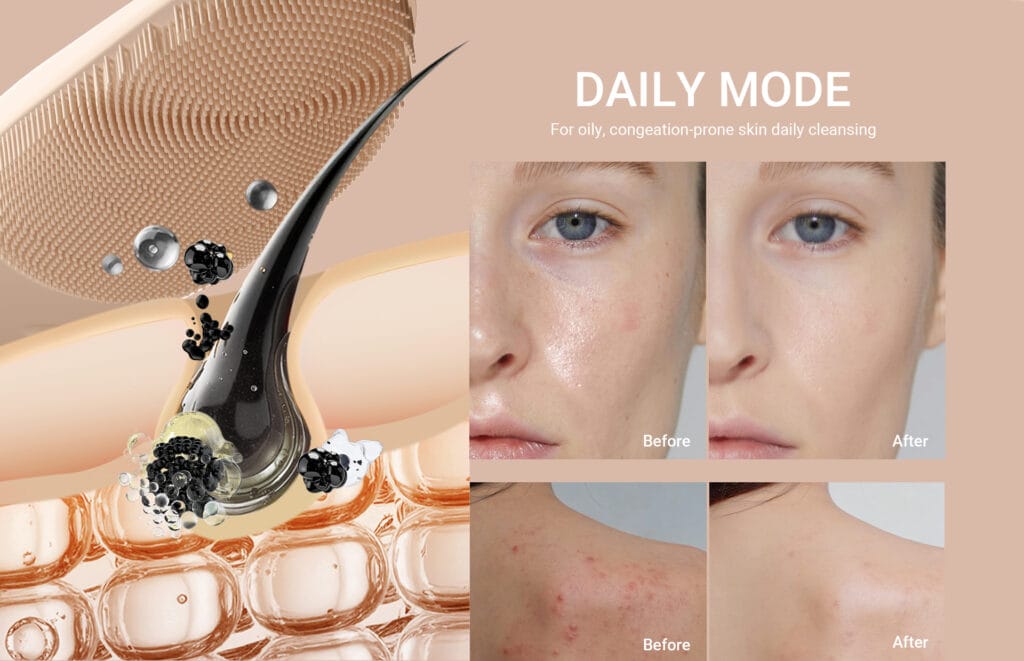
Design around a dynamic barrier
Skin is not a uniform material. The stratum corneum is the outermost part of the epidermis and is central to the permeability barrier. It contributes to water balance and protective functions. Below it, the dermis contains collagen, elastic fibers, blood vessels, and nerves. Subcutaneous tissue contains fat and other structures. 1 These layers help explain why wavelength, frequency, delivered energy, contact method, session time, and topical products must all be considered together.
For a home device, the relevant commercial insight is not a promise of deeper action. It is that the surface barrier can react to friction, heat, light, pressure, and repeated exposure. Excessive rubbing, poorly controlled heat, harsh cleanser combinations, or careless stacking of routines can increase dryness and irritation. A strong consumer design therefore favors clear timer limits, gentle contact surfaces, practical cleaning instructions, and an easy stop-use message.
Translate anatomy into realistic cosmetic language
Cosmetic positioning should describe visible appearance, comfort, and routine support in conditional terms. Examples include “helps support a consistent skincare routine,” “designed for gentle surface cleansing,” or “may improve the appearance of fine lines when used as directed and where supported by product-specific evidence.” These phrases are fundamentally different from claims to repair a barrier, regenerate tissue, remove fat, permanently lift, or replace clinical care.
A systematic review of 37 clinical trials of home dermatology devices found that evidence was more favorable for selected low-power RF devices for rhytides or wrinkles and for LED devices for acne. The authors also reported limited high-quality study designs and insufficient long-term efficacy and safety data. 2 That evidence supports careful, modality-specific product planning; it does not make any home device a universal skin-rejuvenation solution.
Build barrier respect into the user experience
The following design choices turn this principle into a product requirement:
| Design element | Why it matters | Suitable B2B question |
|---|---|---|
| Contact surface | Texture, coatings, and edges can affect friction and comfort | Is the surface material stable with the recommended routine products? |
| Energy control | Heat, current, and optical dose need predictable limits | Does the final device have validated timers, cutoffs, and fault handling? |
| Protocol clarity | Repetition and stacking can alter user exposure | Does the IFU state frequency, duration, and areas to avoid? |
| Stop-use guidance | Irritation requires a simple customer response | Are redness, burning, discomfort, or other reactions addressed clearly? |
This approach improves usability without implying a therapeutic result. It also provides a practical standard for comparing prototype samples with the production-ready device.
How Do LED, RF, Electrical, Ultrasound, and Care Technologies Compare?
Technology names often appear interchangeable in sales materials, yet their outputs, evidence, and safety controls are materially different.
Compare each modality by its physical output, realistic cosmetic role, model-specific evidence, and essential controls; never transfer a claim, protocol, or safety conclusion from one energy modality to another.
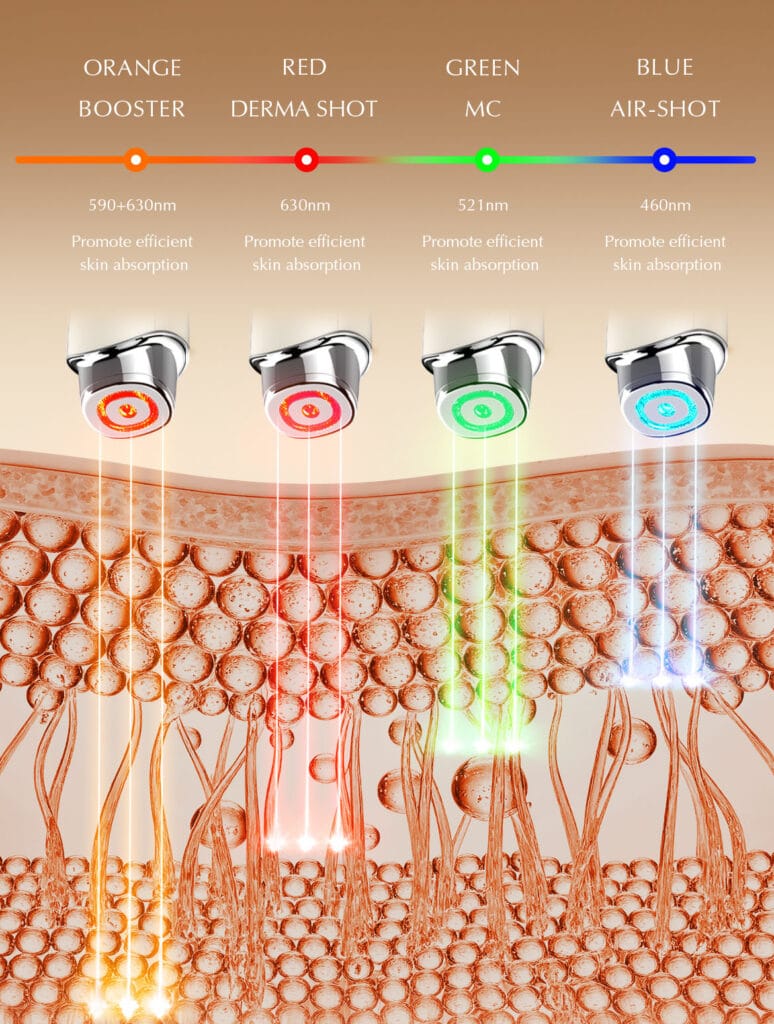
Compare mechanisms without turning them into promises
The table below distinguishes common home beauty device technologies. It is a commercial and technical screening tool, not a claim authorization list. Product-level performance must still be supported by the exact finished model, intended use, and target-market review.
| Technologie | Technical mechanism | Evidence-aligned cosmetic framing | Controls and boundaries |
|---|---|---|---|
| LED / red or near-infrared light | Non-ionizing optical radiation delivered at defined wavelengths and dose | May support the appearance of selected photoaging concerns or be considered for a device-specific routine; results vary and require repeated use 3 | Verify wavelength, irradiance, fluence, coverage, timer, IEC 62471 assessment, eye protection, and photosensitivity warnings 5 |
| Non-invasive low-power RF | Radiofrequency energy that creates controlled tissue heating | Limited, device-specific evidence suggests possible improvement in the appearance of wrinkles or firmness 2 | Verify frequency, power, electrode geometry, temperature limits, contact detection, and overheat protection; do not confuse with RF microneedling |
| EMS | Pulsed electrical stimulation intended to stimulate nerves or muscles | May be framed as facial stimulation or temporary cosmetic appearance support only when substantiated | Verify current, waveform, frequency, pulse width, contact conditions, contraindications, and area-of-use warnings 6 |
| Mikrostrom | Low-intensity skin-contact electrical stimulation; often described as sub-milliampere | Evidence for home facial cosmetic devices remains limited and parameter-specific 7 | Do not treat it as identical to EMS; validate output under realistic skin loads and use the specified conductive medium |
| Ultrasound | Non-ionizing acoustic energy with thermal and mechanical effects | May support topical-application routines only where model and formulation evidence permit | Verify frequency, intensity, duty cycle, coupling medium, temperature, contact method, and acoustic-output consistency 9 |
| Cleansing | Mechanical surface movement, vibration, or soft-brush action | Supports a gentle cleansing routine and sensory experience | Control friction, pressure, head hygiene, waterproofing, and cleanser compatibility 12 |
| Infusion-style function | Often ultrasound or another contact-assisted topical application method | A delivery-support concept, not guaranteed deep penetration or drug delivery | Validate device-formula compatibility, coupling medium, microbial controls, and claim language 10 |
| Massage | Surface mechanical movement, rolling, vibration, or pressure | May support comfort, relaxation, or a temporary refreshed appearance | Avoid claims of tissue remodeling, detoxification, or permanent contour change |
| Scalp care / hair-related devices | May use light, massage, cleansing, electrical stimulation, or combinations | Scalp cleansing and comfort are distinct from hair-growth claims; hair-related claims require product-level and market-specific substantiation | Match light output, user population, warnings, and evidence to the specific intended use 14 |
Keep RF microneedling outside the home category
Non-invasive home RF and RF microneedling must never be treated as variants of the same consumer proposition. RF microneedling uses needles to penetrate the skin and deliver RF energy at depth. The FDA warns of reported burns, scarring, fat loss, disfigurement, and nerve damage with certain uses. It states that RF microneedling is a medical procedure and should not be used at home. 4 A consumer home range should not include or imply this procedure.
Treat light and ultrasound as measured systems
LED count does not establish dose. A complete optical specification includes nominal and measured peak wavelength with tolerance, spectral bandwidth, irradiance at the actual treatment distance, fluence, coverage area, operating mode, treatment time, and measurement conditions. IEC 62471 supplies the photobiological safety framework for lamps and lamp systems, including LEDs. 5
Likewise, ultrasound is not synonymous with focused medical ultrasound. Acoustic frequency, power, intensity, duty cycle, beam profile, effective radiating area, coupling medium, and motion protocol affect exposure. Ultrasound can create heat and mechanical effects, including cavitation. The FDA identifies thermal injury, mechanical injury, ocular injury, electrical shock, and use error as risks relevant to aesthetic focused-ultrasound systems. 9 These boundaries make exact output verification essential.
What Product-Selection Framework Reduces Risk Before Development?
A product can look differentiated in a catalog yet fail when its claim, specifications, safety package, and user protocol were never aligned.
Use a five-gate framework: define the routine, fix measurable outputs, validate safety, substantiate finished-product claims, and localize the regulatory and commercial package for every target market.
Gate one: define the consumer routine and claim boundary
Start with one plain-language routine. For example, an LED mask may be positioned for a repeatable light-based skincare routine. A cleansing brush may support gentle surface cleansing. A facial stimulation device may be intended for cosmetic facial stimulation. The goal is not to choose the strongest possible claim. It is to define a useful consumer expectation that the final device can support.
This gate should also exclude unsuitable statements early. Home beauty devices should not be presented as tools that diagnose, treat, cure, prevent, permanently lift, regenerate tissue, melt fat, or replace a clinician. For hair-related products in particular, any growth-oriented wording needs product-level substantiation and market-specific regulatory review. The AAD advises that laser-based home products have shown promising findings for some people with pattern hair loss, but they do not work for everyone and require ongoing use over months. 14
Gate two: freeze the specification architecture
A supplier quotation is not a specification file. Buyers should require the operating parameters for every mode and define acceptable tolerances before design freeze. The right items vary by modality:
| Modality | Specification items to lock | Production question |
|---|---|---|
| LED | Wavelength, irradiance, fluence, coverage, distance, timer, pulse mode | Does irradiance mapping show repeatable dose across the treatment area? |
| RF | Frequency, power, energy density if used, electrode area, temperature ceiling, session timer | Are output and temperature stable across contact conditions and battery state? |
| EMS / microcurrent | Current, voltage, waveform, frequency, pulse width, duty cycle, electrode material | Is output characterized under different skin-impedance conditions? |
| Ultrasound | Frequency, intensity, duty cycle, acoustic power, beam profile, couplant, time | Is output verified in a defined load by a calibrated method? |
| Mechanical care | Motion, frequency, amplitude, pressure/contact design, timer, waterproofing | Does the device remain safe after cleaning, drops, and repeat cycles? |
Gates three through five: validate, substantiate, localize
Safety validation should cover electrical and electromagnetic compatibility requirements appropriate to the product and market, charger and battery behavior, overheating, ingress, mechanical durability, skin-contact materials, and clear fault responses. Where energy is involved, model-level verification should include foreseeable misuse, not only ideal bench conditions.
Then review the human evidence. Request the full protocol, device identity, sample size, comparator or sham where applicable, skin types, treatment schedule, endpoints, statistics, follow-up, and adverse events. Before-and-after images can support merchandising, but they cannot replace auditable substantiation. Finally, align labeling, IFU, claims, warnings, and marketplace listings with each target market. Regulatory status and advertising language must travel together.
Which Device Categories Fit a Coherent Private-Label Range?
A broad catalog can become difficult to sell when products overlap, claims compete, and accessory logic is inconsistent across categories.
A coherent private-label range assigns each category a distinct consumer need, controlled technology, measurable specification set, differentiated experience, appropriate market role, and defined OEM/ODM development path.

Build categories around routines, not exaggerated outcomes
The category map below can help a brand create a tiered portfolio. It covers the seven requested category families while keeping claim scope aligned with their different technical boundaries. The “market fit” column describes commercial positioning, not a regulatory classification or performance guarantee.
| Category | Consumer need | Core technology | Specifications to control | Product differentiation | Market fit | OEM/ODM considerations |
|---|---|---|---|---|---|---|
| Face Toning | A guided facial-stimulation routine | EMS, microcurrent, or controlled combination | Current, waveform, frequency, pulse width, electrode geometry, conductive medium, timer | Ergonomic probes, intensity ramp, protocol guidance, travel format | Beauty-tech and routine-led skincare ranges | Separate EMS from microcurrent in documentation; validate area-of-use, output consistency, warnings, and gel compatibility 6 |
| LED | Light-based skincare routine | Red, near-infrared, blue, or model-specific combinations | Wavelength, irradiance, fluence, coverage, distance, timer, optical safety | Mask fit, panel geometry, comfort, dose consistency, eye-safety design | Premium at-home beauty technology | Link every claim to the final optical design; assess photobiological and eye safety 3 |
| RF | Appearance-focused warmth and skincare ritual | Non-invasive low-power RF | Frequency, power, electrode area, thermal ceiling, contact sensing, timer | Thermal feedback, glide medium, motion guidance, contact control | Premium cosmetic-device range with disciplined claims | Keep it distinct from RF microneedling; use conservative appearance language and thermal-risk controls 2 |
| Cleansing | Gentle daily surface cleansing | Sonic vibration, rotation, or soft silicone movement | Motion profile, amplitude, head material, pressure, timer, ingress rating | Hygienic head design, easy cleaning, travel charging, soft contact | Entry-to-midrange routine accessory | Validate cleanser compatibility, cleanability, replacement cycle, and gentle-use instructions 12 |
| Infusion | Structured topical-application step | Contact-assisted application, possibly low-intensity ultrasound | Acoustic or motion parameters, couplant, session time, formula compatibility | Serum pairing, applicator geometry, cleaning design, guided protocol | Skincare-system accessory where substantiation is strong | Do not promise deep delivery; test device-formula compatibility and specify approved media 10 |
| Massage | Comfort, relaxation, or a refreshed tactile routine | Roller, vibration, warmth where validated, or manual-inspired movement | Motion, vibration, surface temperature, contact material, timer | Quiet operation, contour fit, cooling/warming accessory strategy | Giftable wellness and beauty accessory | Keep claims temporary and experiential; validate temperature and surface durability |
| Scalp Care | Cleansing, comfort, and scalp-routine support | Soft mechanical massage, cleansing, or light in specifically substantiated products | Bristle/contact design, pull force, waterproofing, light output if present, hygiene | Shower usability, scalp contour, replaceable attachments, app-free simplicity | Haircare and scalp-care range | Separate care claims from hair-growth claims; any hair-related claim needs specific evidence and market review 14 |
Create a range architecture that customers understand
A range works best when the customer can tell why each SKU exists. One practical architecture begins with cleansing and massage as accessible routine accessories. It then adds face toning and LED as technology-forward products with carefully documented protocols. RF and infusion-style devices may be reserved for brands able to invest in deeper specification, safety, and claim substantiation work. Scalp care can extend the routine beyond the face without implying that every scalp device is a hair-growth device.
Across the range, common design language can reduce buyer complexity. Shared charging platforms, accessory logic, app-free timers, packaging dimensions, color systems, and multi-language IFU templates help build a recognizable private-label family. However, common industrial design must not lead to common claims. Each mode and product retains its own output controls, contraindications, test requirements, and permitted marketing language.
How Should Product Claims and Formats Fit Each Target Market?
A statement that seems harmless in one listing can trigger a regulatory, advertising, or marketplace issue when copied into another country or category.
Market fit requires local claim discipline: use cosmetic, routine-focused language unless the exact model has the evidence and authorization for a narrower intended use, then keep packaging, IFU, advertising, and marketplace content consistent.

Start with intended use, not a compliance logo
Nicemay serves beauty and skincare brands, importers, distributors, wholesalers, retailers, Amazon sellers, and e-commerce brands in the United States, European Union, Australia, Japan, and South Korea. These are important but different commercial environments. A certification image, test mark, or overseas clearance does not independently determine what may be claimed in every other market.
The starting point is the precise intended use. Is the product a gentle cleansing tool, a cosmetic facial stimulator, a light-based beauty device, or a device with a more specific regulated claim? The answer should direct the classification assessment, local responsible-party or importer obligations, labels, instructions, technical documentation, and advertisements. A U.S. 510(k), if relevant, must be checked by its number, exact indication, and substantial-equivalence summary. It is not a universal approval or proof of superior efficacy. 10
Use claim language that matches the evidence level
A useful copy hierarchy protects both conversion and credibility. Cosmetic-routine language is generally the lowest-risk starting point. Examples include “designed for gentle cleansing,” “supports a consistent skincare ritual,” “provides a surface massage experience,” and “designed for facial stimulation for cosmetic use,” where the device documentation and local rules support such language. Any performance language should be conditional, modest, and tied to the finished model.
| Language to favor when supported | Language to avoid without specific evidence and authorization |
|---|---|
| “May help improve the appearance of fine lines” | “Erases wrinkles” or “permanently lifts” |
| “Designed for a repeatable LED skincare routine” | “Reverses aging” or “repairs skin” |
| “Supports topical application with a compatible medium” | “Deeply infuses any ingredient” or “delivers drugs” |
| “Scalp-care routine support” | “Regrows hair” or “treats hair loss” |
| “Gentle surface cleansing” | “Treats acne,” “unclogs all pores,” or “repairs the barrier” |
The AAD notes that “FDA-cleared” should not be treated as “FDA-approved” or “FDA-certified,” and clearance does not guarantee a product’s effectiveness. 3 This distinction should be protected in product pages, distributor sheets, influencer briefs, and paid-media copy.
Match product format to the market’s user context
Form factor affects more than shelf appeal. Mask fit affects treatment distance and light leakage. Handpiece shape can alter RF contact or ultrasound motion. A cleansing head affects friction and hygiene. A scalp device affects hair entanglement, comfort, and cleaning behavior. For each market, translate the IFU accurately and validate that frequency, treatment time, warnings, accessories, and stop-use instructions are comprehensible in the local user context. This helps a compliant device remain a usable device.
How Should an OEM/ODM Program Move from Brief to Launch?
Projects lose time when design, testing, claims, packaging, and supply planning advance on separate tracks and only meet near launch.
An effective OEM/ODM program develops the finished device as one controlled system: consumer brief, industrial design, parameters, accessories, testing, claims, labeling, production controls, logistics, and post-market feedback advance together.

Turn the commercial brief into a controlled development file
A clear brief should name the target markets, consumer routine, price tier, channel, desired form factor, technology, planned claims, color and branding requirements, accessory strategy, target launch date, and forecast volume. It should also include non-negotiable risk boundaries. For example, an RF product brief should specify non-invasive use only and exclude any design that resembles RF microneedling. An LED brief should state the required optical output and eye-protection approach, not merely the number of LEDs.
At Nicemay, we encourage customers to review the same brief across design and engineering, marketing, and compliance. This prevents a late-stage conflict such as a marketing concept requiring an output, protocol, or claim that the selected platform has not been validated to support.
Use disciplined design and validation gates
The program should move through defined gates rather than informal sample approvals. Each gate should have a pass/fail record, named owners, and change control.
| Program stage | Key outputs | Buyer approval focus |
|---|---|---|
| Discovery and brief | Target markets, consumer need, claim boundaries, commercial plan | Is the proposition realistic and differentiated? |
| Concept and industrial design | Form factor, user journey, accessory architecture, preliminary risk review | Does the design enable correct use and cleaning? |
| Engineering freeze | Final outputs, firmware, materials, charger, packaging dimensions | Are specifications measurable and toleranced? |
| Verification and validation | Safety, EMC, output, thermal, optical/acoustic where applicable, usability, compatibility | Do reports cover the final model and accessories? |
| Pilot production | Work instructions, incoming checks, calibration, traceability, packaging verification | Is production repeatable at target quality? |
| Launch readiness | Local labels, IFU, claims library, logistics documentation, customer-support flow | Does every public statement match the finished product file? |
Plan quality, logistics, and payment as launch inputs
Stable capacity is not only an operations topic. It depends on approved components, supplier qualification, incoming inspection, assembly controls, calibration, aging where needed, final inspection criteria, and serial or batch traceability. A controlled mass-production process also protects firmware and parameter version control. A change to LED binning, electrode coating, transducer, battery, or firmware can change the delivered experience and may require re-evaluation.
Buyers should align packaging tests, shipment configuration, battery documentation, lead times, deposit and balance terms, inspection milestones, and warranty responsibilities before mass production. Doing so protects the product program from avoidable delays while giving distributors and retailers the documentation they need for listing and import processes.
What Should Buyers Verify Before Selecting a Home Beauty Device Supplier?
A supplier can provide attractive samples yet still lack the controls needed to reproduce output, safety, documentation, and delivery at commercial scale.
Select suppliers through auditable proof: final-model specifications, independent safety reports, finished-device evidence, production controls, traceability, clear change management, and a practical response plan for complaints or adverse events.

Ask for final-model evidence, not generic paperwork
The strongest procurement question is simple: “Does this report cover the exact model, final firmware, charger, accessories, materials, operating modes, and intended-use configuration we plan to sell?” A prototype report, a certificate for a related model, or a generic marketing test is not enough.
For LED systems, request measured wavelength, irradiance mapping, fluence, output variation, thermal drift, aging information, and a photobiological safety assessment for the final geometry and operating modes. IEC 62471 is relevant to photobiological safety assessment for LEDs and other incoherent optical sources. 5 Confirm eye-protection design and instruct users not to substitute ordinary sunglasses where the product instructions require specific protection. 3
For RF, request frequency, output power, electrode configuration, temperature control, contact sensing, timer, and over-temperature test results. For electrical stimulation, request waveform, current, voltage, frequency, pulse width, duty cycle, skin-load conditions, and open/short-circuit protections. FDA guidance for powered muscle stimulators highlights precautions involving implanted electronic devices, particular placement areas, and pregnancy-related uncertainty. Final labeling must be localized and based on the specific product’s risk assessment. 6
Audit the supplier’s production and quality system
A sample demonstrates possibility. A production system demonstrates repeatability. Review the process used to control critical components, supplier changes, incoming quality, calibration, assembly instructions, in-process inspection, final functional testing, software or firmware versions, serial-number assignment, and retention of records. For a device with energy output, batch records should make it possible to trace a customer concern back to the manufacturing configuration.
| Supplier review area | Evidence to request | Why it matters |
|---|---|---|
| Product specification | Controlled datasheet with tolerances and test conditions | Prevents output ambiguity |
| Safety and compliance | Applicable final-model reports, declarations, and market mapping | Separates testing from unverified marketing claims |
| Human evidence | Full protocol and data for the same or equivalently engineered model | Tests whether claims fit the actual product |
| Quality control | Inspection plans, calibration records, defect criteria, change controls | Supports repeatable output and appearance |
| Materials and accessories | Contact-material file, compatibility data, cleaning instructions | Protects user comfort and product life |
| Post-market readiness | Complaint process, adverse-event escalation, recall and referral plan | Enables a responsible response if problems occur |
Evaluate communication as part of risk control
Choose a supplier that can explain what the product does not do as clearly as what it is designed to do. This is especially important for claims around infusion, scalp care, microcurrent, and massage, where a plausible mechanism does not automatically establish a cosmetic result. A capable OEM/ODM partner can help preserve the distinctions among engineering data, safety evidence, human-use evidence, labels, and commercial copy.
For ultrasound-related systems, suppliers should provide calibrated output information and thermal or mechanical risk assessment under realistic contact conditions. Health Canada’s therapeutic-ultrasound guidance emphasizes calibration, accurate timing, coupling, motion to reduce hot spots, and the minimum necessary exposure; it should inform risk management rather than be copied as a universal consumer label. 11 This evidence-led communication is what makes a product range more credible over time.
Conclusion: What Should B2B Buyers Remember?
Choose measured performance, safe routine design, precise claims, and auditable production controls. That is how home beauty device technology becomes a durable B2B product strategy.
My Role: What Does Nicemay Contribute to Your Home Beauty Device Program?
Brands need more than a catalog when product credibility depends on engineering detail, controlled customization, reliable production, and responsible claims.
At Nicemay, we help international beauty and personal-care brands translate a commercial brief into a configurable, quality-controlled home beauty device program with clear specifications, practical OEM/ODM support, and market-aware documentation.
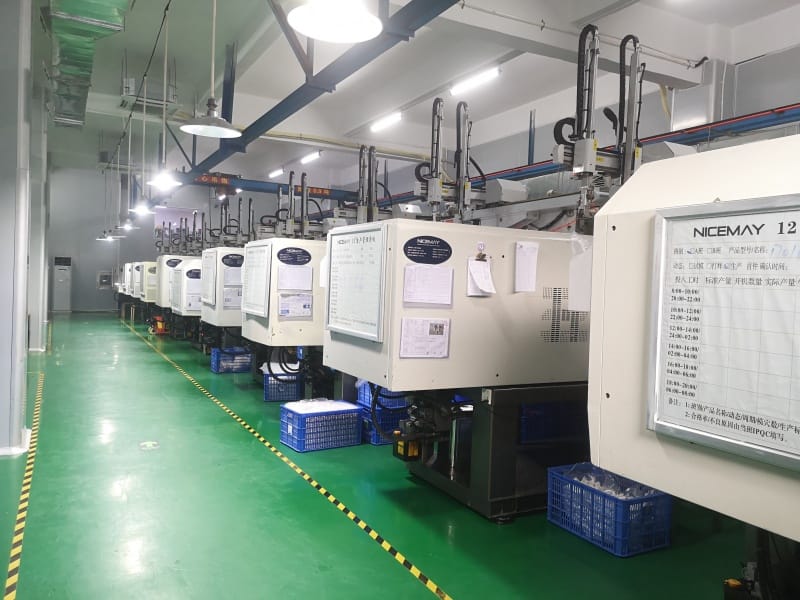
Partner around a disciplined product brief
Nicemay is a Shenzhen-based international OEM and ODM manufacturer of beauty and personal-care devices. Our portfolio includes facial massagers, microcurrent facial devices, EMS beauty devices, RF beauty devices, LED masks, cleansing brushes, skin scrubbers, facial rollers, eye massagers, neck beauty devices, and private-label beauty devices. We work with brands, importers, distributors, wholesalers, retailers, Amazon sellers, and e-commerce brands across the United States, European Union, Australia, Japan, South Korea, and other international markets.
Our role is not to turn every technology into the same promise. It is to help customers select a product platform that suits their brand, commercial channel, target user, and evidence boundary. We can align industrial design, color and logo customization, mode configuration, packaging, accessory strategy, user instructions, and production planning around the realities of the chosen technology.
Build for commercial continuity
A credible device program also depends on stable capacity, quality control, research and development coordination, logistics planning, and payment terms that fit the program timeline. We support customers through the sequence from concept discussion and sample evaluation to specification confirmation, customized development, production planning, inspections, and delivery coordination.
For customers considering LED, RF, EMS, microcurrent, ultrasound-related, cleansing, infusion-style, massage, or scalp-care formats, the most productive starting point is a detailed brief. It should identify the target markets, desired routine, claims boundary, core mode, form factor, accessories, forecast quantity, brand requirements, and required documentation. This creates a practical basis for an OEM/ODM discussion and avoids forcing a product into an unsupported position.
We also encourage customers to preserve a clean documentation trail from the approved sample to mass production. That includes the final model configuration, firmware where applicable, materials, charger, key output specifications, packaging, IFU, and quality criteria. The result is a stronger foundation for private-label launches, distributor communication, marketplace listings, and repeat orders.
References
[2] Home-based devices in dermatology: a systematic review of safety and efficacy
[3] Is red light therapy right for your skin?
[5] IEC 62471:2006 — Photobiological safety of lamps and lamp systems
[8] 510(k ) Summary: NuFace® Device
[10] Low-Frequency Sonophoresis: A Promising Strategy for Enhanced Transdermal Delivery
[13] Skin effect of facial cleansing combined with an electric sonic device